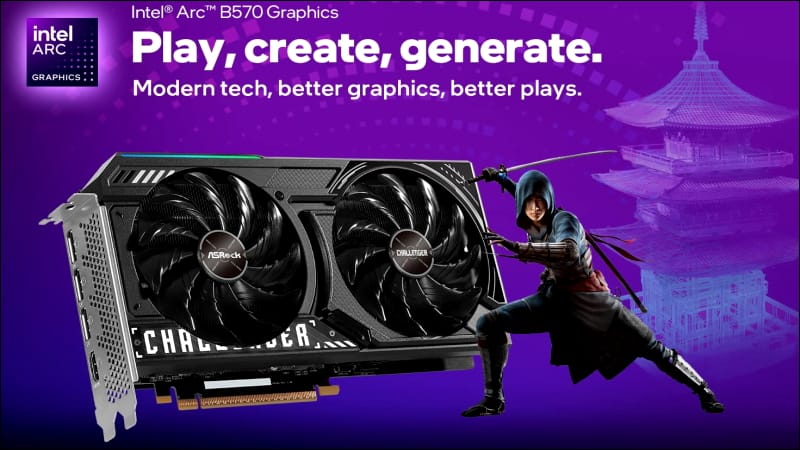
Developing modern video graphics cards is not something that Intel is easily recognized for. However, the chip manufacturer has come a long way from its humble beginnings, with its first attempt at an AGP-based discrete card in 1998. Since then, it has moved forward significantly with the re-entry of the Intel Iris Xe and the Intel Arc series in 2020.
The rise in inflation has driven the GPU market into a state of shock. At the time of this writing, the prices of graphics cards around the world are about 34% above MSRP. In the States, Nvidia and AMD are deadlocked in maintaining their outrageous prices. Intel is the only company currently selling its latest graphics cards way below the market value.
As more PC gamers discover ways to construct their ideal system within their budget, Intel is gradually gaining popularity in discrete cards. The Intel Arc B570 Challenger 10GB OC hits the sweet spot for those seeking reasonably priced 1080p and 1440p gaming action.
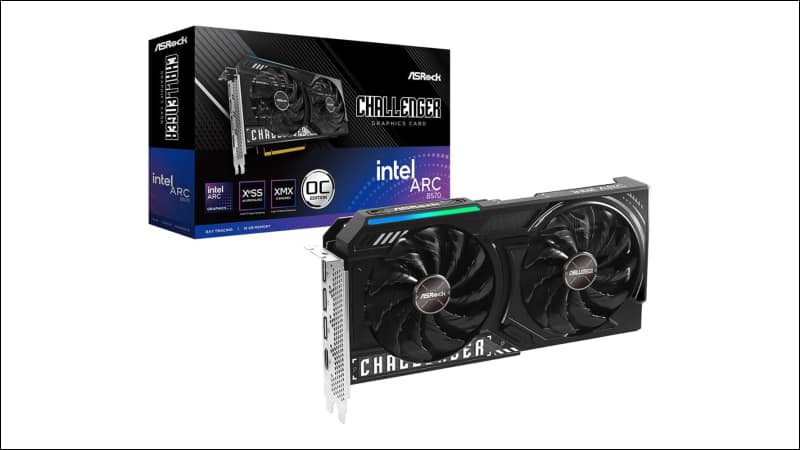
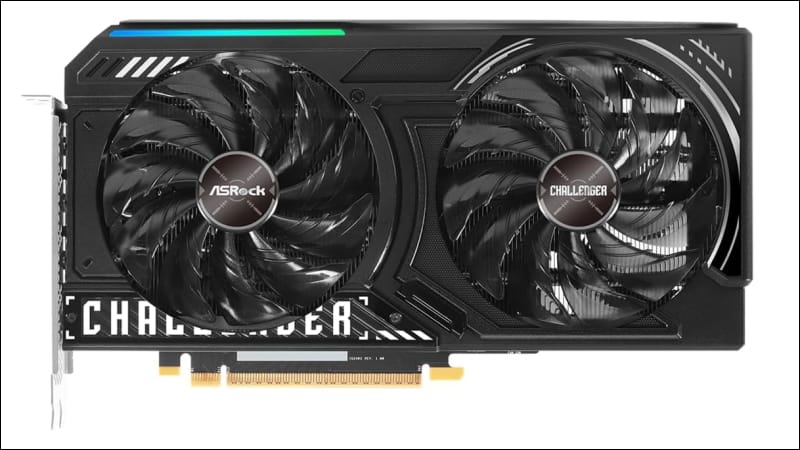
The performance is comparable to the Nvidia RTX 4060. The RTX 4060 is selling for about $400 to $500, while the Intel Arc B570 Challenger sits between $260 and $280 in price. The Intel Arc B570 Challenger features 10 GB GDDR6 memory on a 160-bit bus. It has a GPU clock speed of 2600 MHz with 19 Gbps memory speed.
It uses the Intel XeSS 2 technology, which supports Intel Xe Super Sampling 2 through AI-powered upscaling. It has DirectX 12 support and a media engine with AV1 encoding capabilities. On the back, it features 4 connections for monitor display, which include 3 DisplayPort 2.1 and 1 HDMI 2.1a, running on an 8-pin power source.
Now that those nerdy tidbits are out of the way, let me talk about my experience with this card. I have always believed that purchasing a name other than Nvidia or AMD would result in significant performance loss.
It’s safe to assume that, given how inexpensive the Intel Arc B570 is, something has got to give, right? It turns out that this graphics card can handle a lot more than I could have imagined!
Playing games at 1440p with a 144 Hz refresh rate has never looked so good. I have spent hours tweaking the in-game options to see how far I can push the card to its limits. I am able to play Forza Horizon 4 very close to its ultra settings, running up to 90 fps!
I have played Street Fighter 6 at its highest settings, and I don’t see any hiccups there. I have also tried Diablo 4 because I am aware of how resource-hungry it is. Needless to say, the game ran flawlessly, thanks to its 2.6 GHz overclock boost that works right out of the box!
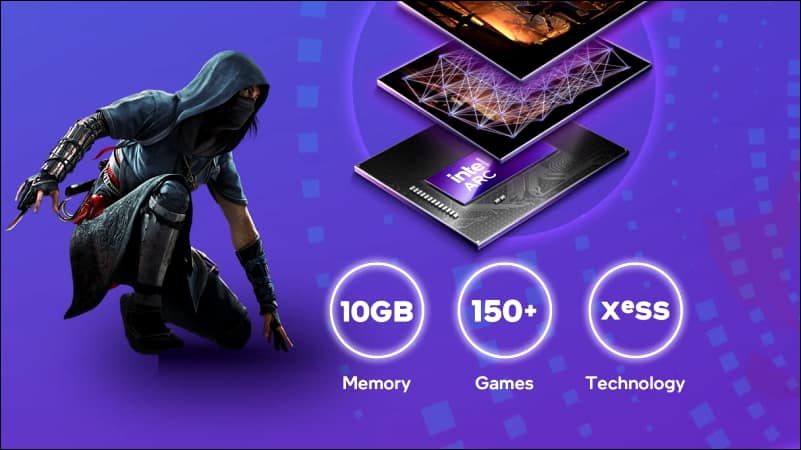
The 10GB VRAM truly comes into play when rendering texture-heavy scenery on the 160-bit bus lane. The quality of shadows, weather effects, mystic fogs, and shiny reflections all look seamless. While there is definitely no lag to speak of, one critical aspect that should be addressed when running this card is that you must enable the 4G encoding and the rebar in your BIOS.
You must also download the Intel Graphics Software, as it contains the precise driver and all the necessary bug fixes to ensure your system runs smoothly. The Intel Graphics Software has several options for managing the graphics card performance.
I would enable the precompiled shaders for a smoother gameplay experience, set the right metrics to monitor the system’s activity on the overlay, and adjust the fan curve to extend the card’s mechanical longevity.
This is a top-notch mid-range graphics card, and its performance can rival that of the RTX 4060. It can handle multiple heavy tasks in both gaming and video editing. At around $280, it’s a solid choice if you’re looking to upgrade without sacrificing on graphical performance. Though it’s a definite overkill if you are just going to play games on a 1080p monitor.